 If you have an electric vehicle, an at-home charging station is a great way to make sure you’re always ready to go. If you’re thinking about getting an at-home EV charger, here are a few key considerations.
Quick Takeaways
- A level 2 charger is often the best choice for most homes.
- A dedicated circuit is required, and you may also need panel or electrical upgrades.
- Hiring a professional electrician can ensure your safety and compliance.
- Incentives (such as tax credits or rebates) can offset the cost of installation.
Why Install an EV Charger at Home or Work?
Installing an EV station at home is more than just convenient. While it’s great to be able to plug your car in overnight at home while you sleep (or at work), there are also other benefits. For example, an at-home charging station can promote cleaner energy and improved efficiency. In addition:
- You don’t need to drive elsewhere to charge your car.
- You’ll save money and enjoy lower fuel costs.
- You can use solar energy to increase environmental benefits.
An EV charger is a good way to attract potential homebuyers if you’re planning to put your house on the market soon. You may even boost your property value.
Types of EV Chargers Explained
When it comes to EV chargers, there are three main types. While two are suitable for home use, a level 3 charger is not due to expense and high power demands.
A level 1 charger is a basic model and uses a standard 120-volt outlet. No installation is required beyond plugging it into one of your home’s three-prong outlets. However, level 1 chargers are slow and only add 3 to 5 miles of range per hour.
A level 2 charger is the most popular option because it charges much more quickly (10 to 50 miles per hour). Because it requires a dedicated 240-volt electrical circuit, you’ll need a professional for installation services.
Many level 2 chargers are also “smart” chargers. These devices feature Wi-Fi connectivity and apps that enable you to monitor energy usage and schedule charging during off-peak electricity rates.
DC fast charging is another option. While it is extremely quick, it’s usually unavailable for home use due to cost and complex electrical requirements.
Key Considerations Before Installation
 Although convenient, a home charging station will significantly increase your electrical load.
Here are some things to think about before installing one:
- Electrical panel capacity – Most homes (depending on age) can handle 100 to 200 amps of current.
- Dedicated circuit requirements – If you don’t have a circuit available, one will need to be installed.
- Hardwired vs. plug-in – Hardwired options are usually safer, but plug-in alternatives provide flexibility and may lower your costs.
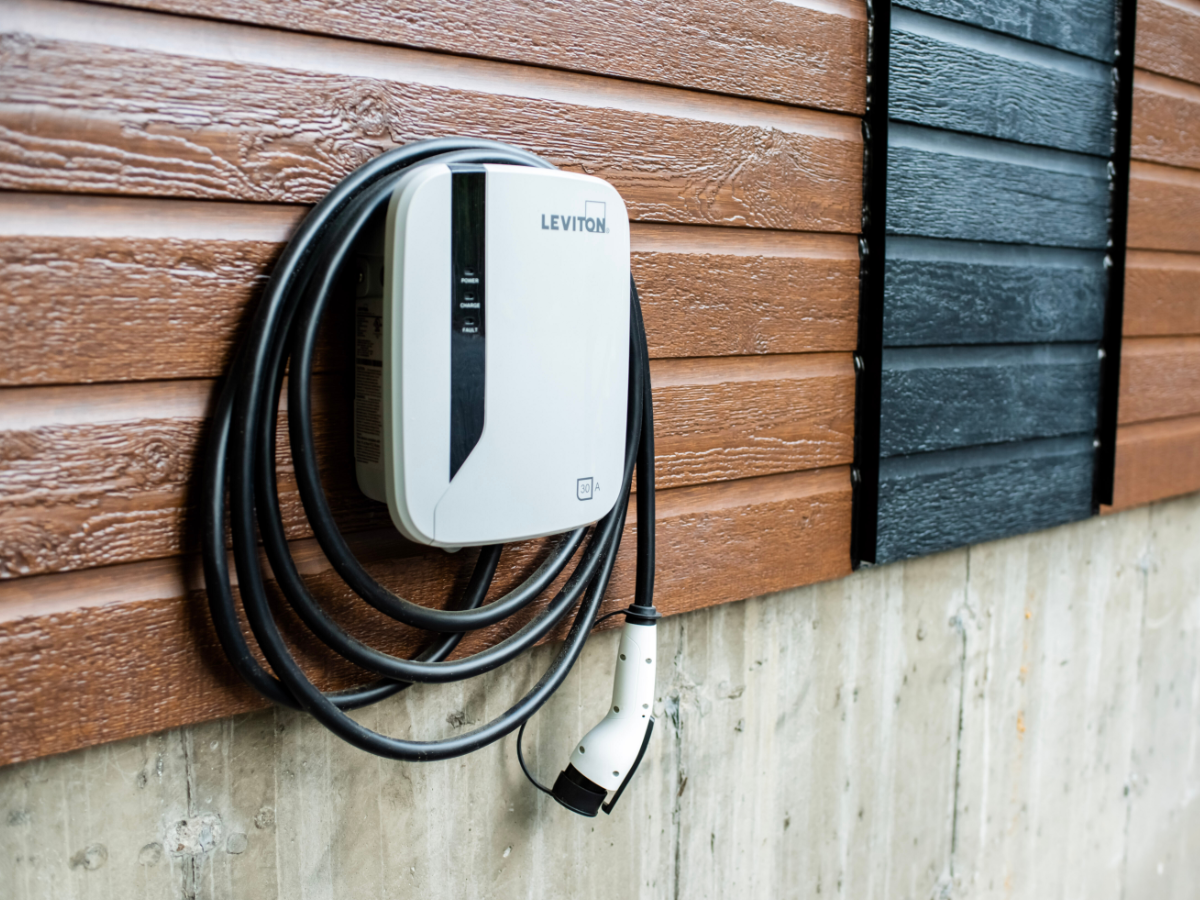
- Indoor vs. outdoor – An indoor charger is usually placed in your garage, protecting your car from the elements and reducing installation costs (since it’s closer to the electrical panel). In contrast, outdoor chargers offer flexibility but must be weather-resistant and may require longer wiring or trenching.
Every charger features a weather resistance rating from the National Electrical Manufacturers Association (NEMA). NEMA 3R protects against rain and snow, while NEMA 4 offers a watertight seal. NEMA 4X provides the best weatherproofing plus resistance to corrosion.
The Installation Process Step-by-Step
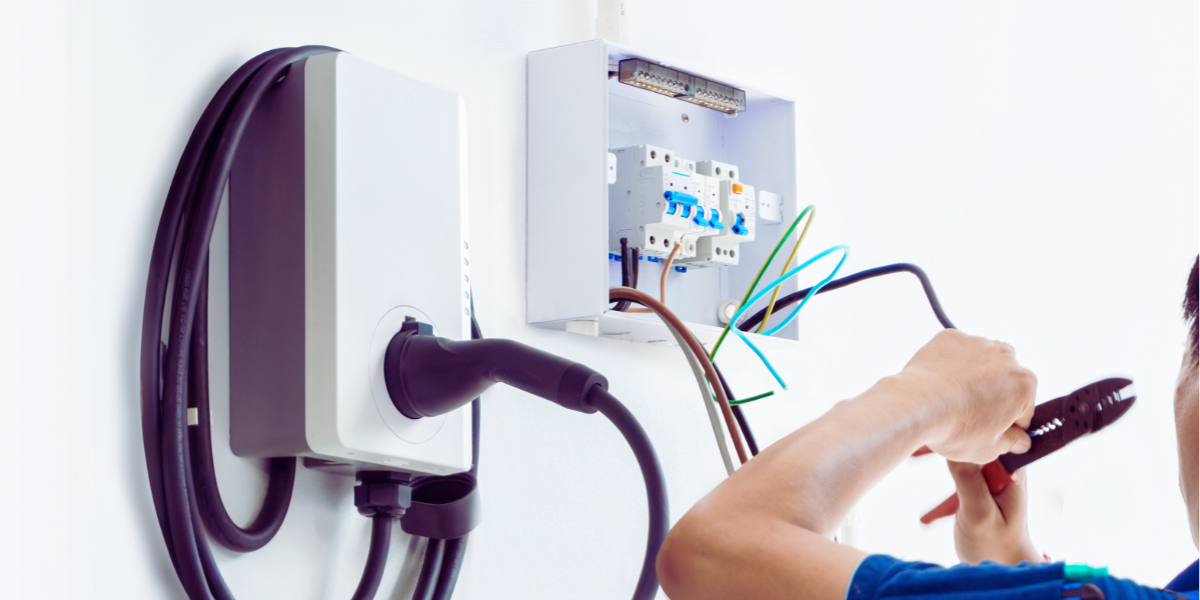
You should always hire a licensed, professional electrician to install EV chargers. They will make sure that all required steps are taken to ensure safety and compliance.
- First, your electrician will assess the electrical capacity of your home and obtain the necessary permits.
- If your panel is at its limit, they will make the necessary upgrades.
- Then, your electrician will mount, secure and connect your charger to a wall or pedestal.
- The wiring is then connected to the charger, inspected and tested to ensure it works correctly.
If your charger includes smart features, your electrician will then help set these up.
Costs, Rebates and Incentives
When determining the cost of installation, you’ll need to consider hardware and labor. Trenching, upgrades and distance can also be significant factors.
Rebates and tax credits (like the Alternative Fuel Vehicle Refueling Property Credit) may help offset your installation costs. Your electricity provider may also offer their own rebate or “time-of-use” rates for EV charging. It’s best to contact your provider to find out if they offer special incentives.
Preparing Your Home or Business for an EV Charger
If you’re considering installing an EV charger, be sure to plan ahead. Preparing your property before your appointment will help you determine the type of charger you want and whether you need to make a few upgrades.
First, check your electrical panel’s capacity. Your electrician can also help determine if you need modifications. Next, decide where you want your charger located. The closer it is to the panel, the lower the installation costs will be. Your electrician will handle obtaining the necessary permits for you.
Finally, choose the charger you’d like to install and clear the area to ensure easy access for your electrician.
Safety, Maintenance and Best Practices
Like with all electrical work, it’s vital to hire a professional electrician. Not doing so can increase your risk of electrical shock, fires or even death.
Once your charger is installed, keep it clean and make sure you don’t get the electrical components wet. Don’t leave the cable lying on the ground, since you could trip or drive over it. It’s also a good idea to schedule professional inspections every couple of years to keep it in good condition.
FAQs About EV Charger Installation
How long does installation take?
Usually, the physical installation process takes between 2 and 4 hours.
Do I need to upgrade my electrical panel?
You may need to upgrade your electrical panel if your home is older, has a 100-amp service or is already at its capacity.
Can I install an EV charger myself?
No, most states require a licensed electrician to install an EV charger.
What’s the difference between hardwired and plug-in EV chargers?
Hardwired chargers are directly connected to your home’s electrical panel. Plug-in chargers use a 240-volt outlet and are usually more flexible and easier to install, but are much slower.
Will an EV charger increase my home value?
Possibly. With the increase in electric vehicle (EV) popularity, home chargers are an attractive feature that can boost your property’s value.
Schedule Your EV Charger Installation Today With Mister Sparky
 An at-home charging station is an excellent solution to ensure your vehicle is always ready whenever you’re ready to hit the road. While the actual installation process is swift, necessary upgrades can take time, so it’s best to plan ahead.
If you’re ready to schedule EV charger installation services, give Mister Sparky a call today. As Miami’s on-time electricians, we offer professional EV charging station installation services to residents in Miami, FL, and the surrounding areas.
With our on-time guarantee, you know we’ll always arrive right when you need us. Remember, you don’t have to put up with any malarky, call Mister Sparky!